BE 2025 - Électrification des usages [EN]
Sections
Section externalisée
Menu tertiaire
Paragraphes de la section
The ambition of reducing fossil fuel imports is now supported by a number of electrification projects that have already secured access to the grid for the coming years
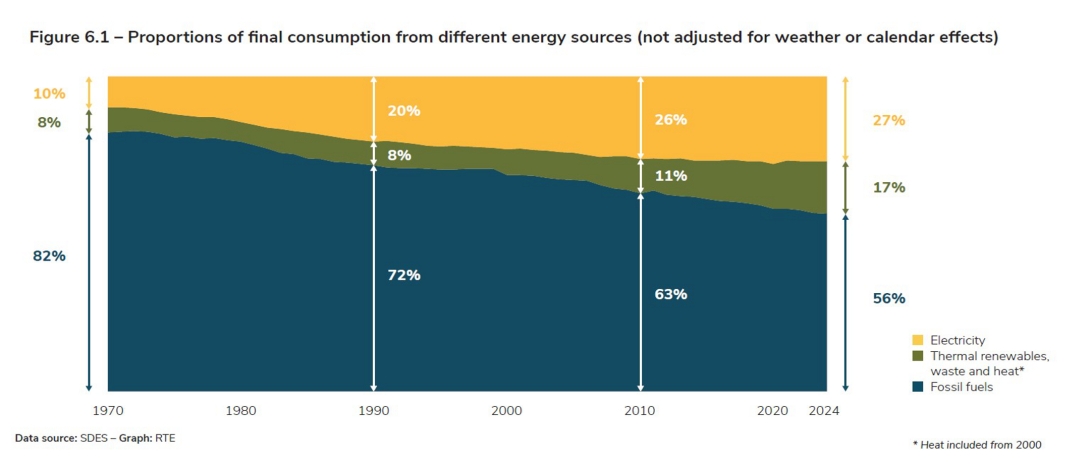
Fossil fuels (oil, gas, coal) continue to dominate final energy consumption in France: in 2024, they accounted for around 56% of the energy consumed in mainland France, while electricity accounted for just 27%1. This high level of fossil fuel consumption is responsible for most of the country's greenhouse gas emissions.
An analysis of historical data shows that electrification has followed different trends over different periods. At the end of the 20th century, electricity rose steadily as a proportion of final consumption from around 10% in 1970 to 26% in 2010, driven by the partial electrification of certain energy uses such as domestic hot water and heating. Since then, the rate of electrification of the economy has remained relatively stable.
While electrification should make it possible to support the switch from fossil fuels to low-carbon energy needed to achieve climate and energy sovereignty targets (see the analyses in the Generation Adequacy Report or Energy Pathways to 2050), recent trends show that this movement has not yet achieved real momentum.
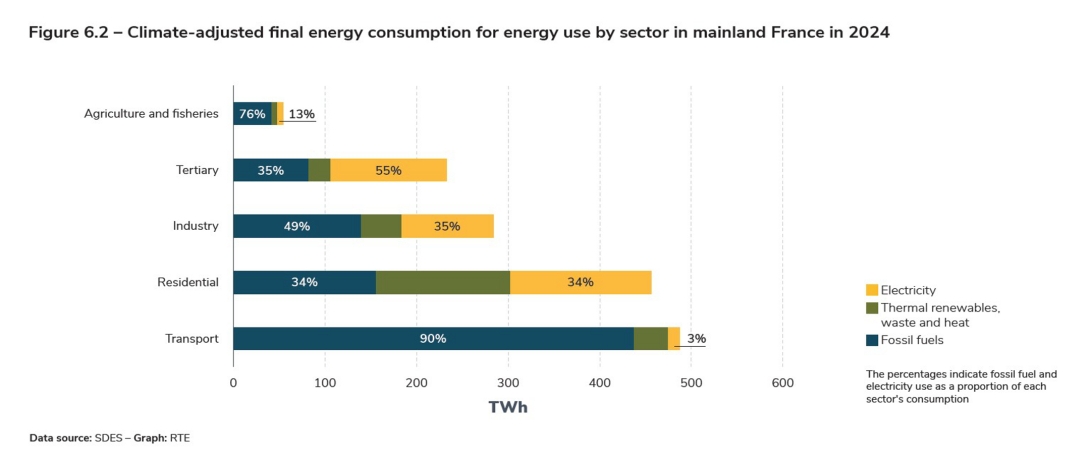
Looking at the detail, the share of electricity relative to fossil fuels varies significantly depending on the sector.
Transport is both the largest consumer of energy and the sector most dependent on fossil fuels, which account for almost 90% of its consumption.
Fossil fuels also represent a significant proportion of energy consumption in other sectors. For example, they still account for 34% of residential energy consumption, mainly for heating, domestic hot water and cooking. In industry, almost half of final energy consumption is supplied by fossil fuels. Lastly, the share of fossil fuels in the tertiary sector and agriculture is 35% and 76% respectively.
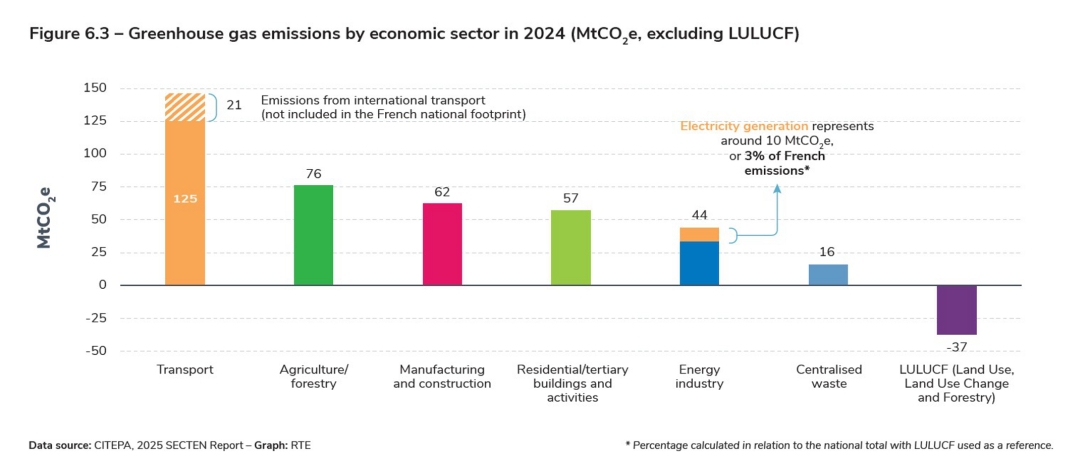
Because of its predominant consumption of fossil fuels, transport is by far the biggest emitter of greenhouse gases in France, accounting for more than a third (34%) of direct emissions2. In addition, this is the only sector in which emissions remained unchanged in 2024 compared with their 1990 level3, whereas they fell in all other sectors. Next comes agriculture, with around 20.6% of emissions, followed by manufacturing industry and the construction sector (16.9%), residential and tertiary buildings (15.5%), the energy industry (9%) and waste management (4.2%).
Only a small proportion of emissions are linked to electricity generation: around 10 MtCO2e in 2025, or approximately 3% of French emissions, since electricity is largely low-carbon (up to 95% in 2024 and 2025), unlike in other countries. The main challenge therefore lies in replacing fossil fuels in sectors other than electricity generation: electrifying these energy uses is a key means of achieving this, reducing dependence on fossil fuel imports and cutting emissions.
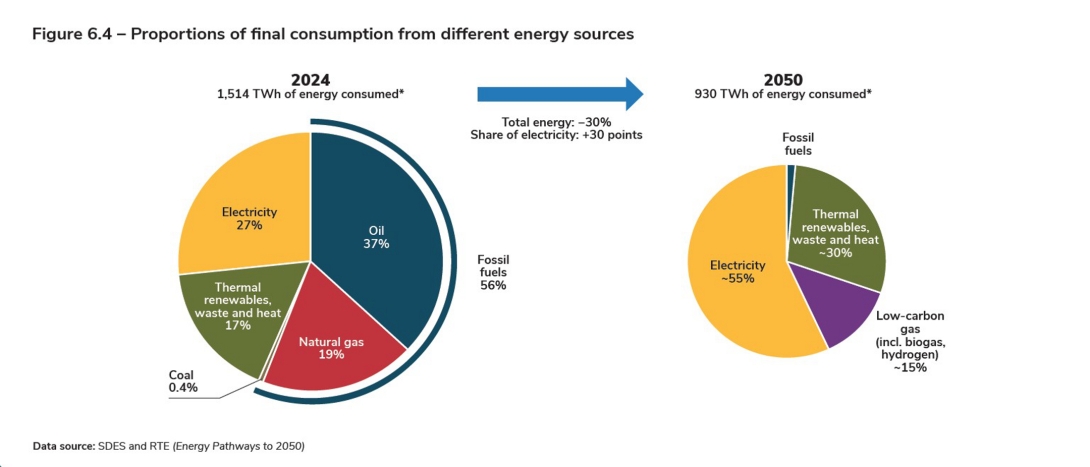
France's decarbonisation strategy is based on a combination of reducing total energy consumption across all vectors (promoting energy efficiency and sufficiency) and switching to low-carbon energy sources, particularly through electrification, which can be deployed to decarbonise many energy uses very effectively. For some uses, electrification also provides major energy savings: an electric vehicle, for example, consumes around three times less energy than a car with an internal combustion engine, and the same is true of an electric heat pump compared with a gas or oil-fired boiler.
Under the PPE multi-year energy plan published in February 2026, the electricity proportion of final energy consumption should reach 34% by 2030 and 38% by 2035, a pathway that is broadly consistent with the rapid decarbonisation scenario presented by RTE in its 2025 Generation Adequacy Report. The government has also announced a plan for the electrification of energy uses with the aim of establishing “concrete proposals in the sectors of industry and crafts, digital, construction and mobility”4. Electrification represents important leverage for achieving the decarbonisation targets, and is also included in the strategies of most other European countries.
Electrification represents an opportunity to strengthen France's energy sovereignty
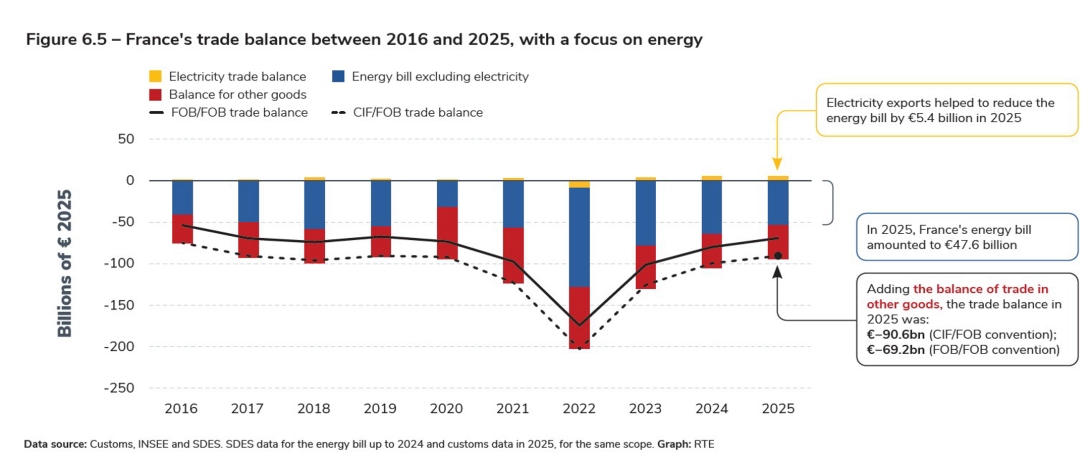
France's energy bill, i.e. the difference between the value of the energy products imported and exported, shows a significant deficit: in 2025, it stood at around €47.6 billion, with €53 billion spent on fossil fuel imports. The majority of these come from non-European countries or countries in the former Soviet bloc (such as Azerbaijan, Georgia, Kazakhstan and Russia), which account for 57% of natural gas imports and 90% of crude oil imports. In 2024, for example, France imported 77 TWh of natural gas from Russia and 90 TWh from the United States5.
Energy products thus account for a major component6 of France's trade deficit in goods (€69.2bn in 20257). This is not an exceptional situation: France's energy bill was between €202528 and 86 billion from 2009 to 2020 (with a peak of €2025 127 billion in 2022, at the height of the energy crisis)8. When France is a net exporter of electricity, as has been the case every year since the early 1980s except for 2022, the value of the electricity exported helps to reduce the energy bill, even though its scale (€5.4 billion in 2025, see the Trading chapter) remains limited compared with fossil fuels.
Replacing fossil fuel consumption with electricity would thus reduce France’s dependence on supplies from non-European countries in the strategic field of energy, and reduce the trade deficit. The choice of electrification is all the more relevant in that France already has abundant, largely low-carbon electricity, at lower prices than most other European countries (see the Prices chapter). RTE's latest future-focused analyses have identified a “strategic situation (...) that is highly advantageous for rapidly decarbonising” the French economy, “without the risk of conflicts of use between the sectors to be electrified”9.
1
SDES, Chiffres clés de l’énergie, January 2026. Data adjusted for climatic variations. Electrification rate excludes non-energy uses of raw materials. The 2025 data was not available at the time of publication of the Electricity Review.
2
The share of emissions excludes the contribution of LULUCF (land use, land use change and forestry), which is negative.
3
Emissions de gaz à effet de serre et de polluants atmosphériques 1990–2024, 2025
4
Programmation Pluriannuelle de l'Énergie, February 2026
5
SDES, Chiffres clés de l’énergie, January 2026
6
Customs data, RTE calculations. The aggregates used here are taken from the quarterly customs reports classification and include products AZ, B05-8Z, C1-C5, D, E, JZ, MN, RU.
7
Source: Customs, trade deficit in goods, FOB/FOB. The valuation of energy products is presented here using the CIF/FOB convention, since the correction from CIF/FOB to FOB/FOB is only available for the total.
8
See also the Trading chapter.
9
RTE, Bilan prévisionnel – Période 2025–2035, 2025 edition
Section externalisée
Menu tertiaire
Paragraphes de la section
Heating in homes and tertiary buildings is still largely dependent on fossil fuels
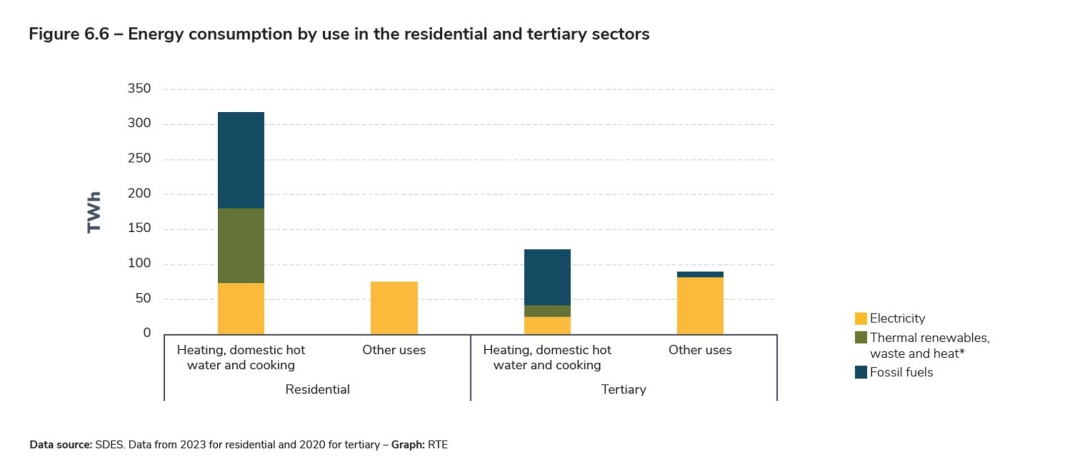
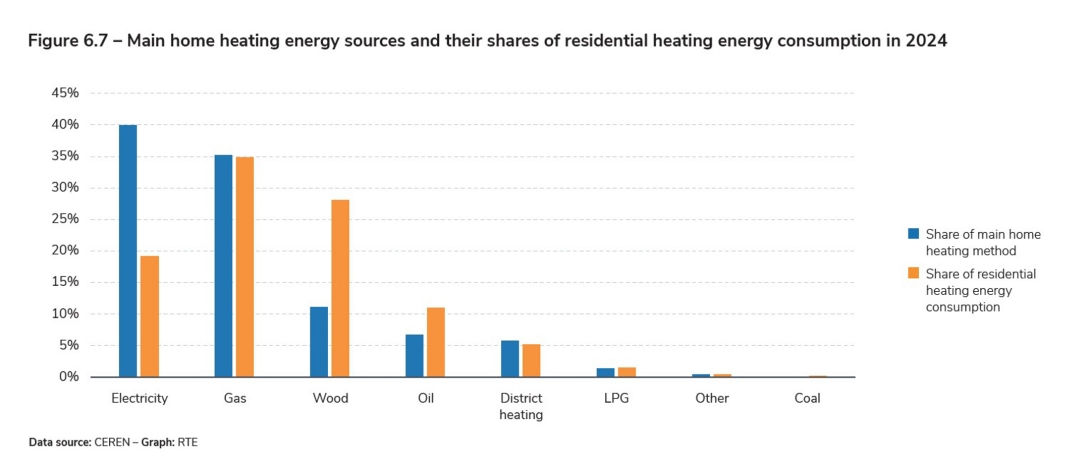
The rate of electrification of final energy consumption in buildings is 34% for homes and 55% for tertiary buildings. While some energy uses, such as ventilation and air conditioning, are already largely electrified, others, such as heating, are currently much less so. Despite a higher level of electrification than in other countries, fossil fuels accounted for 47% of residential heating energy consumption in 202410 (including 35% for natural gas and 11% for oil) and 68% of heating energy consumption in tertiary buildings. Electricity covers only 19% of residential heating needs, with the remainder covered by other sources such as wood burners or district heating networks.
As a result, emissions from homes and tertiary buildings arise mainly from the use of fossil fuels for heating11. Developing efficient electrical solutions, such as heat pumps, to replace fossil fuel boilers is therefore one of the key avenues for decarbonising the building stock.
Sales of heat pumps have fallen since 2024
The main source of energy used for heating in residential and tertiary buildings depends essentially on when they were built. The choice depends on the infrastructure available (such as district heating or gas networks), the technical solutions that exist, their relative prices and the regulations in force.
Historically, heating has already undergone two waves of electrification12. The first was during the 1970s and 1980s, in parallel with the development of civil nuclear power in France, and was based mainly on Joule electric heating. The second came in the 2000s, when rising fossil fuel prices led to a switch to electric heating. During these two periods, the proportion of electric heating in new homes rose to over 50%.
Given the inertia in the development of heating methods in the building sector, these waves of electrification are still reflected in the composition of the heating stock today: around a third of homes (32% in 2020) are currently equipped with Joule electric heating.
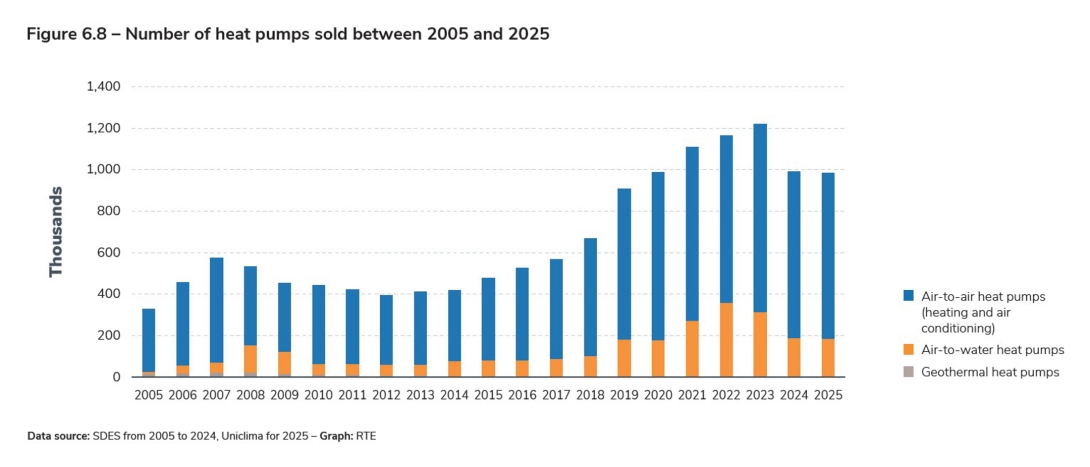
After 2010, the electrification of heating was mainly driven by the development of heat pumps, particularly in new homes. From a very low level of development in the early 2000s, their consumption for heating homes exceeded 10 TWh13 in 2023 and they now account for just under 3% of energy consumption in residential buildings. By 2024, electric heat pumps were the main heating system in around 10% of primary homes.
Yet since 2024, the growth trend of the past fifteen years has stalled. In fact, 2024 saw a significant drop in heat pump sales, with around one million units sold14, 200,000 fewer than the previous year. In 2025, heat pump sales remained stable compared with the previous year15.
The pattern that has been seen since 2024 is partly due to a decline in new house building: 274,600 new homes were begun in 2025, which is 21.3% lower than the average for the previous five years. And although the number of homes receiving planning permission in 2025 (379,00016) was up on 2024 (+14%), this figure is still 8.8% below the average for the previous five years.
The total number of thermal renovations is down, but the number of major renovations is up
The housing stock is characterised by a high level of inertia: several hundred thousand units are built every year, but the stock of main residences amounts to several tens of millions of homes (38.4 million as of 1 January 2025).
These orders of magnitude highlight the benefits of renovating existing homes, and particularly replacing heating systems, to reduce both their fossil fuel energy consumption and their greenhouse gas emissions.
As of 1 January 2025, the most common energy performance certificate (EPC) rating used in the housing stock was “D”. The worst-performing homes, rated F and G (often referred to in France as “heat sieves”) still accounted for 3.9 million primary residences17 (around 12.7% of the housing stock) in 2025, and these are the priority targets for thermal renovation policies. The proportion of these homes in the housing stock fell in 2025: around 327,000 fewer homes, or 1.2 percentage points less as a share of the stock.
The government currently supports heating and insulation upgrades primarily through the MaPrimeRenov’ scheme. This system helps to finance part of the renovation work, whether this is a single action, such as changing the heating system or insulating the building, or a “major renovation”, the most effective type of upgrade, with tailored support.
The MaPrimeRenov' scheme was temporarily suspended during the 2025–2026 budget cycle, meaning that the data made available by ANAH, the national housing agency, for 2025 stops in the third quarter. It was reopened when the 2026 finance act was adopted and has a budget of €3.6 billion for this year (€3.4 billion in 2025), which should make it possible to finance at least 120,000 major renovations and 150,000 individual upgrades18.
Since 2024, ANAH has been favouring larger-scale renovations more than in the past, which partly explains the discontinuity in the number of homes renovated – fewer than before 2024 (226,00019 homes at the end of Q3 25) – and in the grant amounts awarded, which are up significantly (€2.7 billion at the end of Q3 2025 compared with €1.85 billion at the end of Q3 2024). Relative to the same period in 2024, the number of renovations remained stable, but larger-scale, more substantial and more effective renovations were carried out in 77,650 homes, compared with 42,700 in 2024. These projects now account for 82% of the funds granted, compared with 60% the previous year.
10
SDES data, « Consommation d'énergie par usage du résidentiel », 2025
11
CITEPA, « « Le rapport Secten édition 2025 vient d'être publié », 2025
12
13
SDES data, « Consommation d'énergie par usage du résidentiel », 2025
14
Of these million units, around 800,000 were air-to-air heat pumps that can be used for both heating and cooling.
15
Uniclima, « Bilan 2025 du marché du génie climatique et perspectives », 2026
16
17
As of 1 January 2026, the conversion factor from final energy to primary energy for electricity has been reduced from 2.3 to 1.9, which – among other effects – will result in a number of these homes no longer being classed as “heat sieves” and, in the longer term, will favour electric heating over other, more carbon-intensive heating methods.
18
France Renov’, MaPrimeRénov’ : réouverture du guichet à la promulgation de la loi de finances, 2026
19
The figures presented here stop at the third quarter of 2025 as the ANAH scheme is currently suspended pending the adoption of the 2026 Finance Bill.
Section externalisée
Menu tertiaire
Paragraphes de la section
Electric mobility is continuing to develop, but fossil fuels still account for 90% of energy consumption for transport
The transport sector is both the biggest consumer of final energy (one third of French final energy consumption) and the biggest emitter of greenhouse gases (one third of greenhouse gas emissions) in France. Within the sector, road passenger and freight transport, fuelled largely by petroleum products, is responsible for the bulk of energy consumption and consequently greenhouse gas emissions (53% for private vehicles, 22% for HGVs, 15% for light commercial vehicles20).
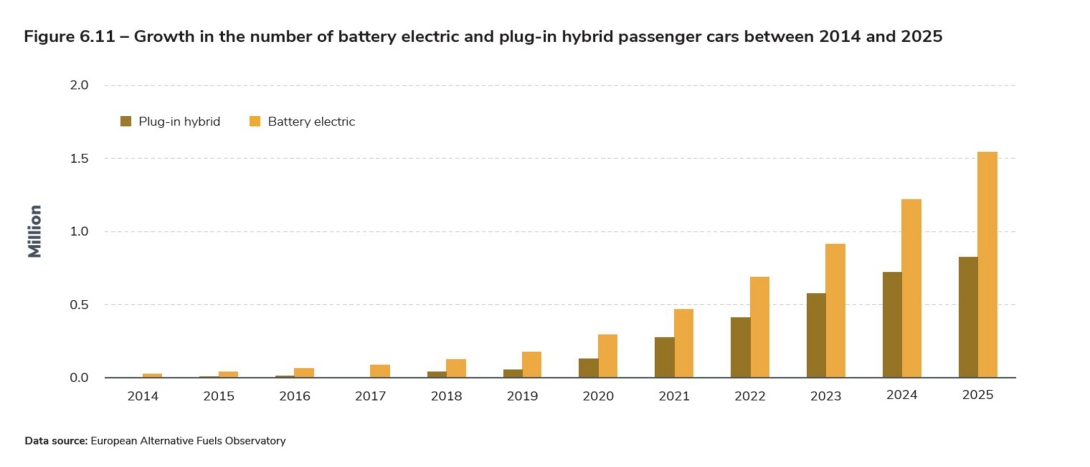
The development of electric vehicles is one of the main ways in which fossil fuels can be effectively replaced in transport, and particularly road transport. France’s car fleet consists of almost 43 million light vehicles (passenger cars and light commercial vehicles), including 1.7 million battery electric vehicles (as of the end of 2025)21. In addition, there are 850,000 plug-in hybrid vehicles, which use both fossil fuels and electricity.
Sales of electric vehicles have resumed their upward trend but need to accelerate further to meet government targets
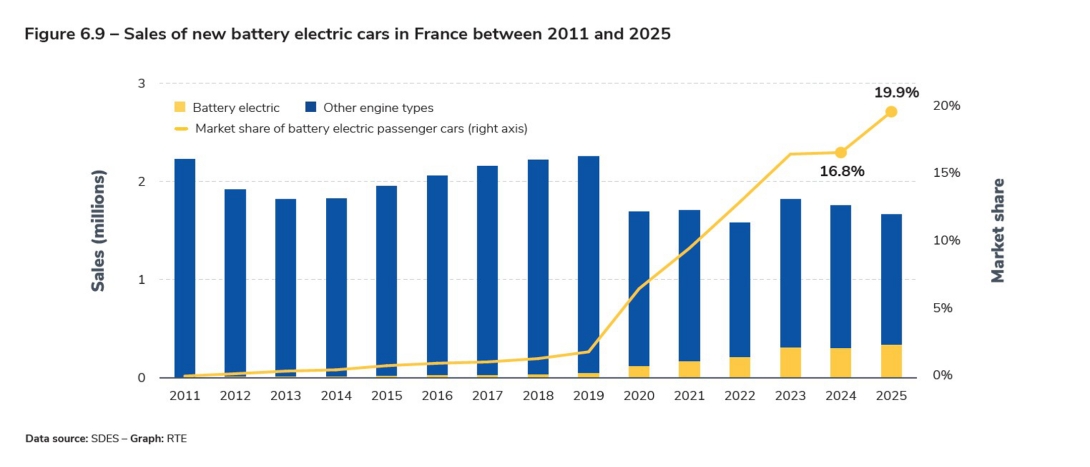
In 2025, sales of battery electric passenger vehicles exceeded 330,000 units, the highest volume ever achieved in France22. This represents an increase of 12% on the previous year, despite the reduction in purchase subsidies during 2025. Their market share increased to almost 20%, up from 16.8% in 2024: in 2025, one in five passenger cars sold was a battery electric vehicle.
Since 2011, sales of these vehicles have grown steadily every year in France, except for 2024 when they stabilised, while the car market as a whole has been slowing since 2024. At the end of 2025, the fleet of battery electric passenger cars had reached 1.5 million units. In addition, there were 825,000 hybrid cars, compared with 1.2 million battery electric cars and 721,000 hybrid cars in 2024.
Electricity consumption by passenger vehicles (battery electric and plug-in hybrids) was about 4 TWh in 2025, an increase of 33% on the previous year23. This represents around 6% of the passenger car fleet, with a renewal rate of around 5% per year.
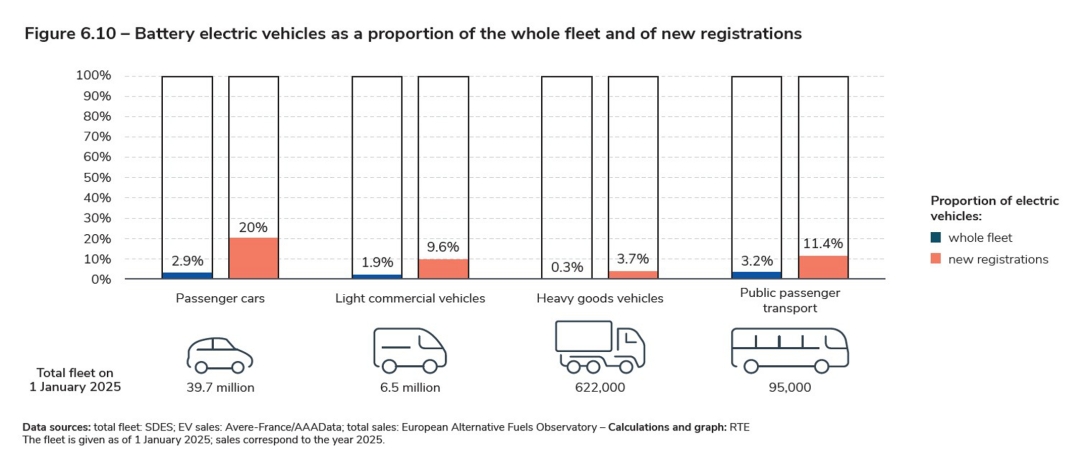
The trend for other categories of electric vehicle is also positive. The number of registrations of light commercial vehicles, public passenger transport vehicles and battery electric heavy goods vehicles increased by 28%, 8% and 39% respectively24 between 2024 and 2025.
Electrification is less advanced in these segments than for passenger cars, but is growing rapidly: battery electric vehicles accounted for 9.6%, 11.4% and 3.7% respectively of new registrations in 2025 in the three categories. However, these vehicles are still a minority of the existing fleet.
The effect of the rise in sales of electric vehicles can be seen in the average greenhouse gas emissions of new vehicles, which have been falling steadily since 2020. They have dropped from 111 g/km in 2020 to 83 g/km for passenger cars and from 177 g/km to 163 g/km for light commercial vehicles. Not all of this reduction is attributable to electric vehicles alone, however – part of it comes from the improved efficiency of internal combustion engines.
The development of charging infrastructure remains dynamic despite a slowdown in 2025
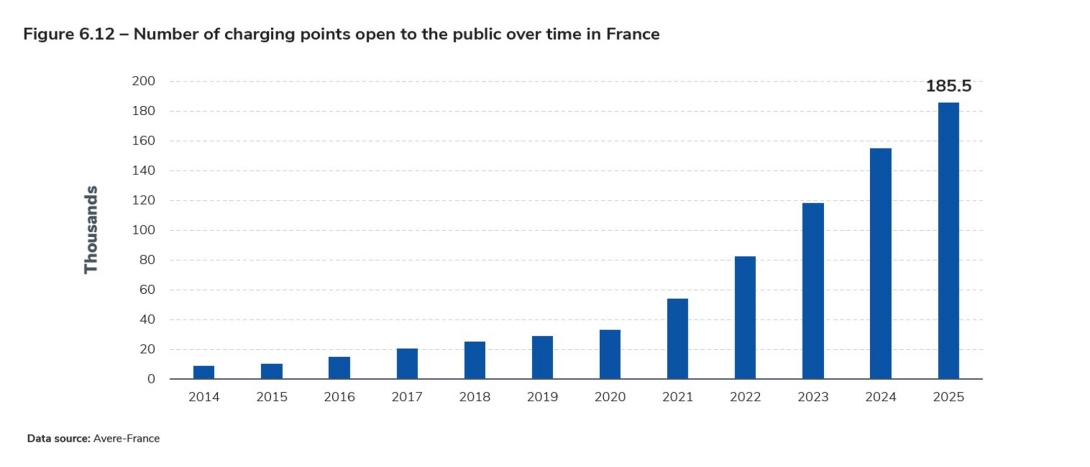
The development of charging infrastructure continued in 2025 with the installation of nearly 31,00025 public charging stations, an increase of 20%, amounting to a total of 185,500 stations. The upward trend remains strong despite a slowdown in the rate at which the number of installations is increasing, averaging +48% per year between 2021 and 2024.
20
SDES, Bilan annuel des transports en 2024 | Données et études statistiques,, November 2025
21
Avere-France, [Baromètre] Décembre 2025 : les véhicules 100 % électriques signent un mois record à 46 282 immatriculations !, January 2026
22
Scope: all of France
23
This is an estimate based on the vehicle fleet and assumptions about mileage and electricity consumption.
24
CCFA/AAA-DATA, Immatriculations mensuelles par énergie
25
Avere-France
Section externalisée
Menu tertiaire
Paragraphes de la section
The electrification of energy uses is an opportunity for French industry, but one that is proving slow to materialise
Industry accounted for 17% of greenhouse gases emissions in France in 202426. Energy-intensive activities (chemicals, metallurgy, iron and steel, agri-food, wood, paper, rubber, plastic and glass manufacturing) are the biggest emitters of greenhouse gases overall. Industry still largely derives its energy from fossil fuels, with natural gas chief among them, though its share is gradually declining – from 63% in 1990 to 48% in 2024, thanks partly to the use of bioenergy and district heating networks.
In contrast, electricity's share of final energy consumption in the industrial sector has risen only slightly over the last 25 years, from 32% in 1990 to 36% in 2024.
Final electricity consumption in industry has been on a downward trend for almost two decades in France, as has final energy consumption across all energy vectors. This trend reflects the effect of energy efficiency measures, which have been widely developed in this sector over the last few decades, as well as the decline in activity in the electricity-intensive sectors, though this came to a halt in the 2010s. Over the last fifteen years, manufacturing's share of GDP has broadly stabilised at around 10% (compared with 16% in 2000).
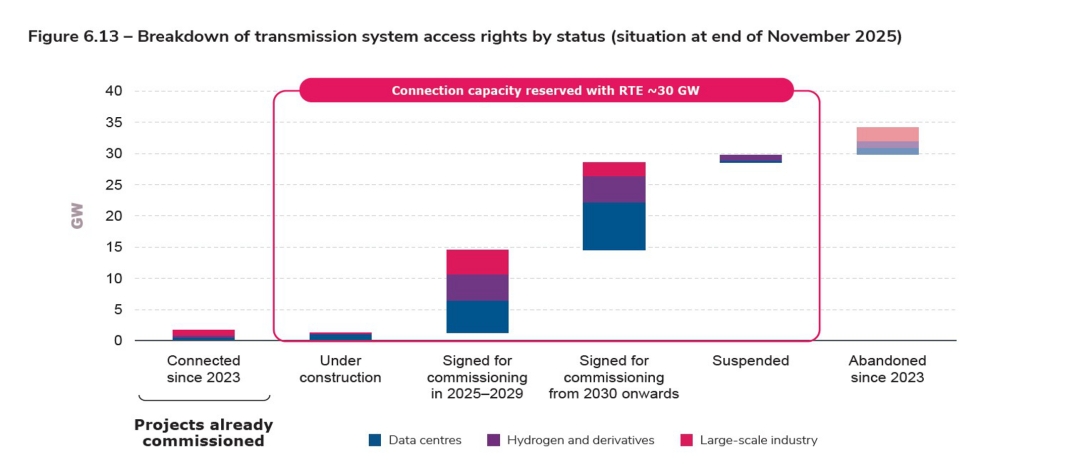
As highlighted in the 2025 Generation Adequacy Report, over 170 major industrial and digital projects are currently under development to contribute to decarbonising existing industrial sites, reindustrialisation and digital sovereignty. Although the effects on industrial consumption are not yet visible, many electrification projects and new industrial sites have been granted access rights to the electricity transmission network. By 1 November 2025, they had reached around 30 GW, including 14 GW for data centres, 9.5 GW for hydrogen production units and 6.5 GW for electrification projects at existing or new industrial sites
Around half of this 30 GW figure involves projects scheduled to come on stream between 2025 and 2029, which should lead to an increase in consumption in the coming years, though this is difficult to estimate accurately because of uncertainty about the speed with which projects will be completed and scaled up. These requests are not binding, and RTE has no information on the level of maturity or progress of the projects being developed by the applicants. The system now needs to be redesigned to identify the sectors in which projects will operate, in order to maximise the chances of industrial projects becoming a reality, in line with the framework set out in the CRE's decision of 23 July 2025.
In terms of concrete achievements, the first major hydrogen project was connected to the RTE network in autumn 2025. This is the Normand'Hy project, led by the Air Liquide group in Port-Jérôme-sur-Seine, which will produce low-carbon hydrogen by electrolysis, decarbonising the hydrogen used by Total Energies’ Normandy refinery located nearby. The project is scheduled to enter operational service in 2026.
In manufacturing, the Alteo group in Gardanne has replaced a gas-fired boiler with an electric equivalent (8 MW) for alumina production, electric kilns have been installed in the glass-making sector (at Verallia in Cognac and the Pochet group in Seine-Maritime), and in metallurgy Saint-Gobain PAM's Vulcain project has replaced a coal-fired cupola furnace at Foug in Meurthe-et-Moselle with a 20 MW electric furnace. Finally, a high-temperature industrial heat pump demonstrator has been set up in the paper industry, in the form of WEPA Greenfield's TransPAC project in Château-Thierry.
Support schemes exist to facilitate and assist investment in decarbonisation projects involving the electrification of energy uses, as these often require high levels of investment. One of the existing schemes is the France 2030 investment programme27, which is helping to finance the Major Industrial Decarbonisation Projects call for bids (AO GPID) managed by ADEME28. This call for bids provides support for the largest industrial decarbonisation projects, backing the winners over a 15-year period. In the first round, seven projects were selected that will avoid 3.8 MtCO2e/year, 24% of the national industrial emissions to be cut by 2030, with a budget of €1.6 billion. Two of these projects aim to replace equipment running on fossil fuels: one with an electric boiler, the other with a furnace fuelled by green hydrogen. There are also schemes at European level, such as the European Innovation Fund dedicated to reducing greenhouse gas emissions29.
France's abundant generation of competitive low-carbon electricity is now an asset that can strengthen France's energy sovereignty and reduce the burden of fossil fuel imports on the balance of trade by developing these new energy uses. Speeding up the implementation of this type of project is now essential.
26
Citepa – Secten, Emissions de gaz à effet de serre et de polluants atmosphériques 1990-2024, 2025
27
Ministère de l’économie, France 2030 : un plan d'investissement pour la France, October 2023
28
29
DGE, Fonds pour l’innovation européen : 14 projets lauréats pour la France, November 2025